River cruises are extremely popular with the over 50s. In fact, the average age of a RiverVoyages customer is 75! The leisurely pace, relaxing atmosphere and culture-rich itineraries make river cruising very appealing to the senior age group. Though accessibility has historically been limited on river cruises, many newer ships and select cruise lines are beginning to incorporate inclusive features to accommodate the mobility needs of their target audience.
For full-time wheelchair users, river cruising can come with significant challenges. However, cruise lines such as Scenic River Tours and AmaWaterways are beginning to introduce ships with improved deck access and accessible cabins. Research is crucial to choosing the right river cruise for you, as accessibility can vary between cruise lines, ships and destinations.
If you can climb a flight of 12-15 steps (even with help and a rest at the top), then you should manage just fine on a river cruise. The reason why this is so important is that on board the vast majority of ships, the elevator only serves some floors.
River cruise ships must be fairly low in order to pass under bridges, and for this reason, the sun deck is usually only accessible by stairs. A few newer vessels, such as select Uniworld and Scenic ships, feature chair lifts or improved elevator access to additional decks, though this remains uncommon.
The walkway on to a river ship is nothing like the walkway on to an ocean cruise ship. The gangplank is very narrow and often doesn’t have a sturdy handrail – more often than not, it’s just a rope.
Depending on the water level, you may board the ship on different decks. This can mean that the gangplank is sloping up or down towards the ship. Sometimes, two or three ships are moored alongside each other. Passengers on the outermost ships, therefore, must negotiate the gangplanks that link the ships together, which are often located on the top deck.
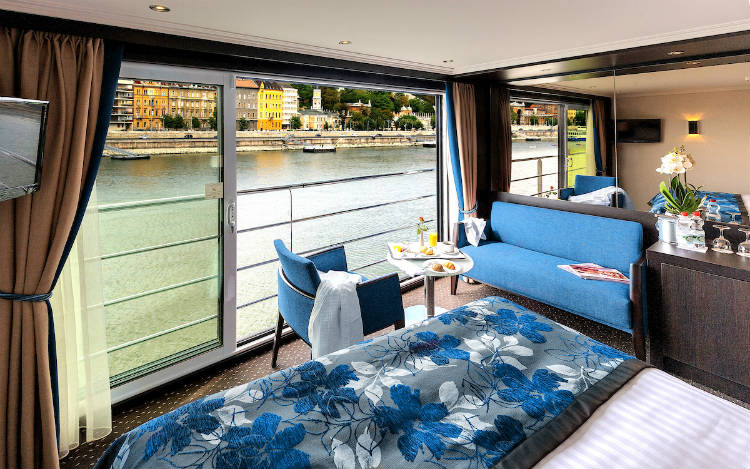
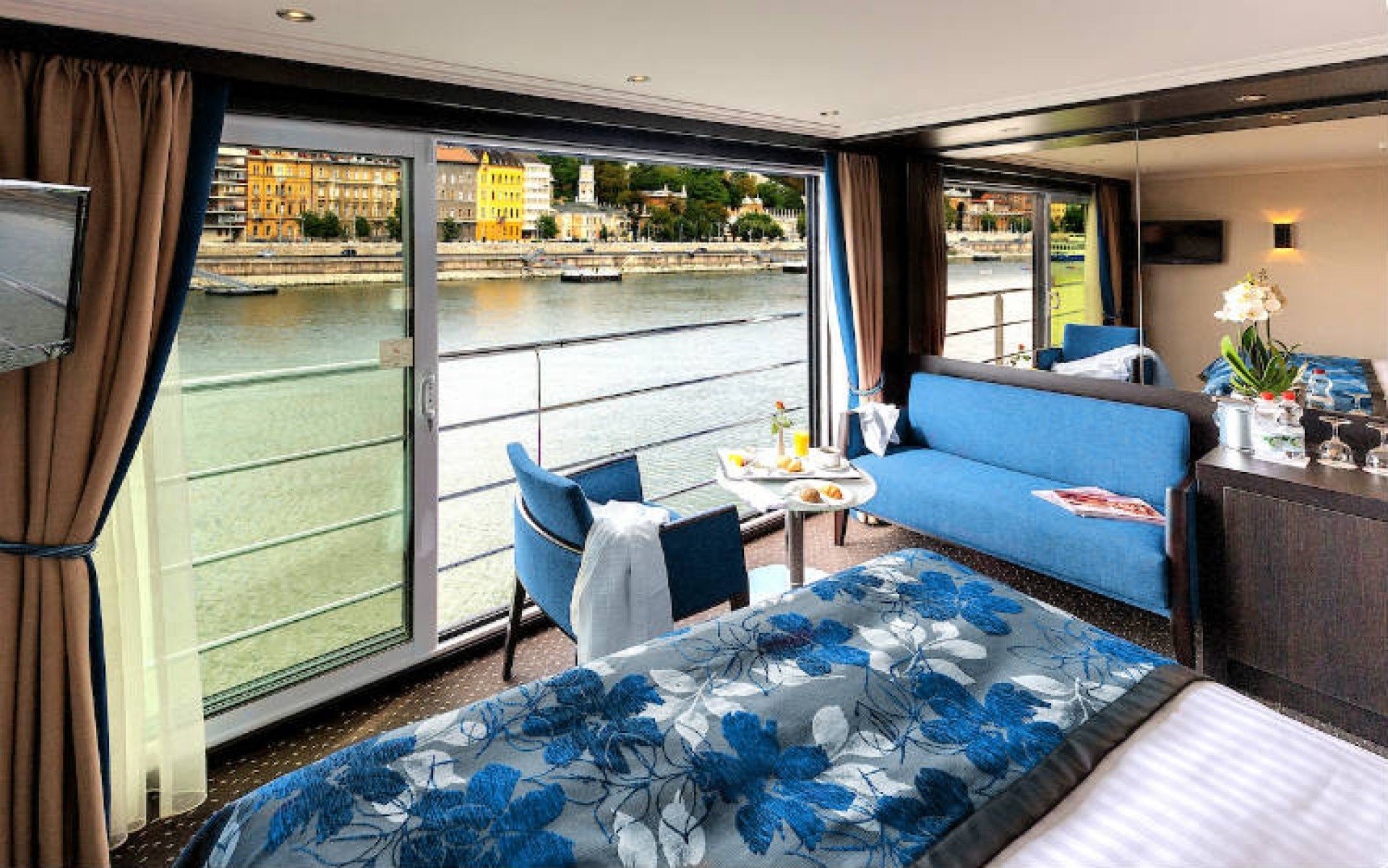
Due to the small size of river cruise ships, the cabins are generally small as well – certainly much smaller than a hotel room. Accessible cabins with wider doors are sometimes available, but these are few and far between and sell out very quickly.
If you require an accessible stateroom, you’d be wise to research carefully and book as far in advance as possible or speak with our Cruise Concierge to discuss specifications like bathroom layout and door width.
With most river cruise ship cabins too small to store a wheelchair, and equipment not being allowed to be left in the corridor for health and safety reasons, the storing of mobility aids can cause an issue. It is for that reason that most river cruise lines have stated that any wheelchairs brought on board must be collapsible so that they can be stored under the bed when not in use.
Most river cruise lines also specify that wheelchair users are required to have a travel companion who is able to assist them. Despite this official line, crew are generally helpful during embarkation and disembarkation – though personal assistance, such as folding and storing wheelchairs, is not guaranteed and must therefore be handled by a travel companion.
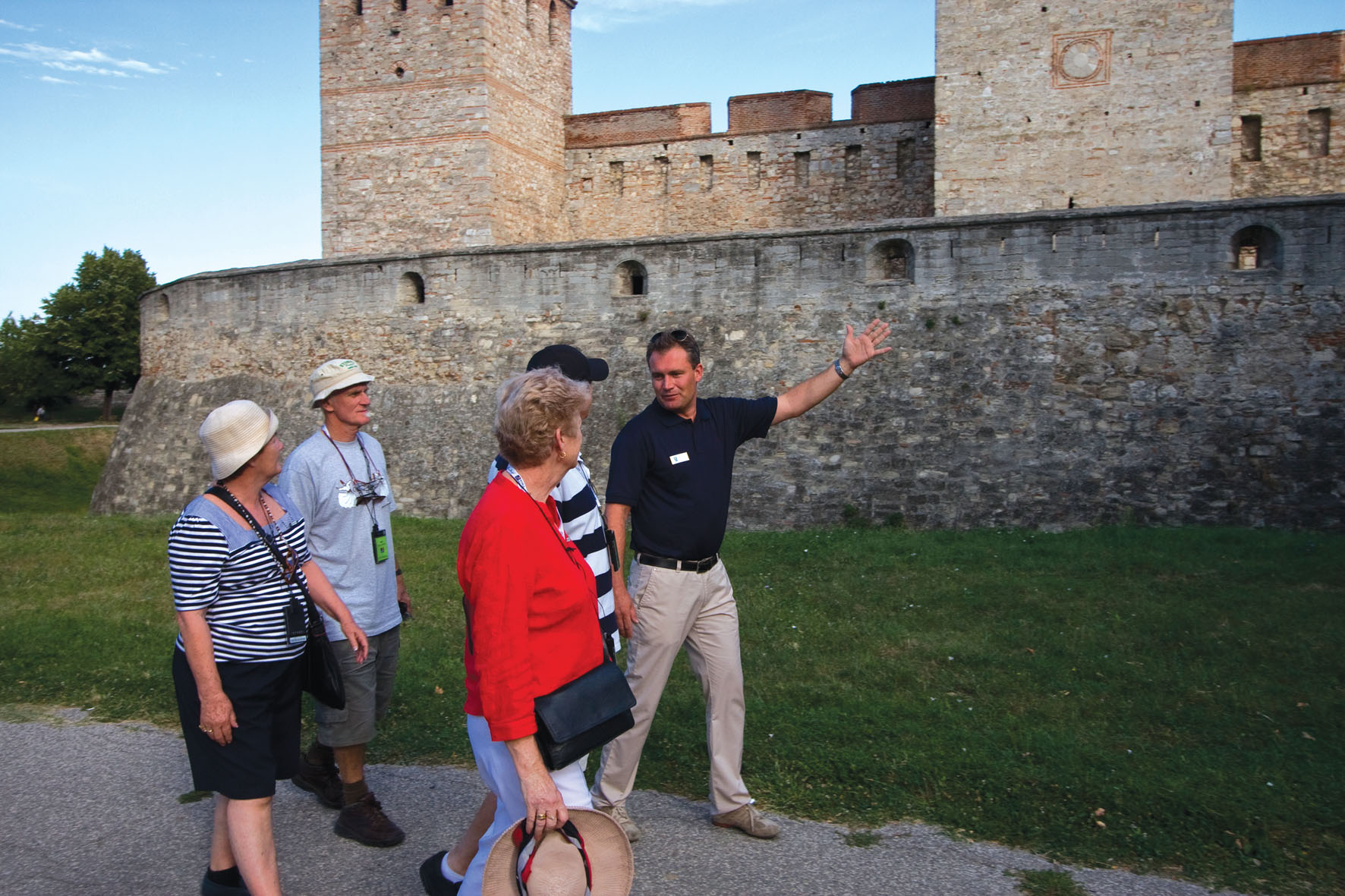
Most river cruise excursions are walking tours and require a good level of fitness. You will find that some river cruise lines categorise their excursions and that slower-pace tours are available. For any tours that involve coach travel, passengers will need to be able to store any mobility aids beneath the coach and climb the four or so steps on to the coach.
As excursions are generally included in the price of a river cruise, you may feel you are wasting money if you can’t join them. A good option for someone looking to add excursions à la carte if desired is Amadeus, as excursions are not included within the base fare and can be added later.
The good news for disabled travellers is that many key towns and cities are located on the banks of Europe’s waterways, meaning that attractions are usually very close by, with no need for a bus or taxi.
The bad news, however, is that many of Europe’s historic towns have cobbled streets. European kerbs can also be much higher than those in the UK. If you’d like to explore independently, your cruise director will be able to suggest the best routes to take.

One of the highlights of any river cruise holiday, as admiring the scenery pass you by from the ship. If you’d like this to be the focus of your holiday, it would be wise to choose an itinerary that has lots of sailing time and fewer days in port.
Popular options are the Danube and the Rhine. These long stretches of river have stunning, UNESCO-listed scenery and are also ideal for first-time river cruisers.
If you’d like any more information on accessible river cruising for disabled passengers or would like to confirm that your needs can be met, here at RiverVoyages.com we have a team of expert Cruise Concierge who would be delighted to help. Just give us a call on 0808 258 2182.
